
From Childhood Inequality to Dissociative Crisis
Kim Ji-young, Born 1982This flow traces how gendered treatment shapes Kim Jiyoung’s understanding of herself from childhood through motherhood, until accumulated strain appears as dissociative episodes and prompts psychiatric reassessment.
increasing Bearing strength in each event
 decreasing
Bearing strength in each eventdecreasingA Daughter’s Unequal Place
A Daughter’s Unequal Place
Family Order
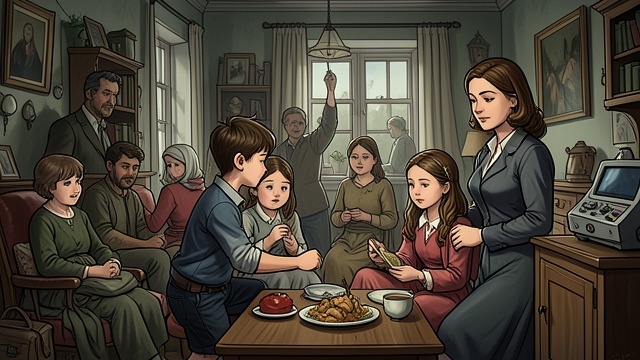
Kim Jiyoung grows up in a crowded household where her younger brother receives the best portions, new belongings, and the first claim on resources. She and Kim Eunyoung learn to share what remains and are praised for not competing with him.
The unequal treatment is presented as ordinary family practice rather than a single dramatic injury. Its force lies in repetition: the girls are asked to accept less while being told that their generosity is a virtue.
Inherited Expectations
Koh Boonsoon’s affection for her grandson reflects the son preference that has shaped her own life. Oh Misook, meanwhile, carries the burden of meeting expectations she did not create, including the pressure to produce a boy.
Kim Jiyoung has no language for the pattern yet. Her childhood quietly establishes the terms by which she will later recognize unfairness, even when adults insist that it is natural or harmless.
School Lessons in Silence
School Lessons in Silence
Everyday Harassment
At school, a boy desk-mate repeatedly hits Kim Jiyoung, takes her belongings, and humiliates her. When a teacher first blames her for the classroom shoe incident, a girl finally tells the truth, and the boy is made to confess.
The teacher apologizes for misjudging Kim Jiyoung, but then recasts the boy’s harassment as evidence that he likes her. The explanation undermines the apology by asking her to reinterpret fear and cruelty as affection.
Learning to Question
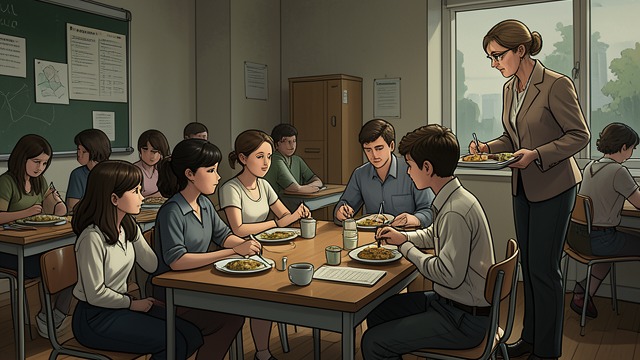
During school lunches, students are served in roster order, which repeatedly leaves girls with less time to eat. Yuna proposes reversing the order, and the teacher accepts a rotating arrangement, giving Kim Jiyoung a small lesson in challenging an unfair rule.
That victory remains partial: the classroom still places boys first in many routines, and the slow eaters remain under pressure. Kim Jiyoung begins to sense that individual corrections do not necessarily undo the assumptions beneath them.
Fear and Career Resolve
Fear and Career Resolve
A Threatening World
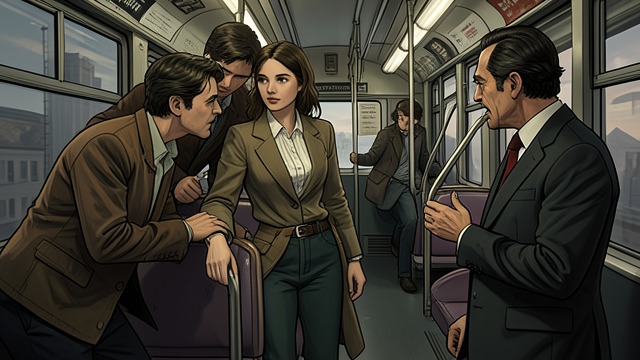
As a teenager, Kim Jiyoung encounters sexual harassment on public transport, in educational settings, and at school. A frightening bus incident ends when a woman passenger helps her escape a follower, but afterward her father admonishes her about her clothes and choices instead of placing responsibility on the harasser.
The stranger’s insistence that the incident was not Kim Jiyoung’s fault gives her a counterweight to victim-blaming. Yet fear still narrows her movements: she leaves her cram school and avoids contact with unfamiliar men.
Work and Exclusion
After college, Kim Jiyoung’s search for work brings repeated rejection and interviews that expose her to degrading questions and remarks. She eventually secures a position at a marketing agency, but advancement is structured around assumptions that women will not remain long-term employees.
When a planning team is assembled, she is excluded despite her competence. The decision reveals that performance alone cannot overcome managers’ expectation that women will leave for childcare, weakening her belief that diligence can secure equal opportunity.
Marriage, Motherhood, and Retreat
Marriage, Motherhood, and Retreat
A Decision with Unequal Costs
After marriage, Kim Jiyoung and Jung Daehyun confront family pressure to have a child. Kim Jiyoung weighs the physical, professional, and social costs, while Jung Daehyun initially describes parenthood as a change that will affect them both without fully grasping how differently it may reshape her life.
Kim Jiyoung challenges the idea that Jung Daehyun will merely help with childcare and housework. Her question exposes the deeper assumption that these responsibilities belong to her and that his participation is optional assistance.
Work Ends, Care Begins
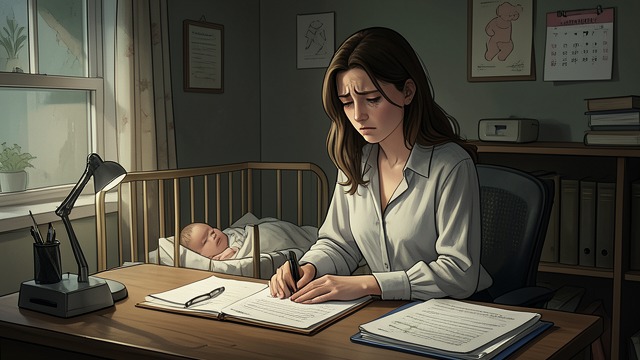
Once their daughter is born, the couple conclude that one parent must stay home, and Kim Jiyoung leaves her marketing job. Her decision is practical within their available childcare arrangements, but it ends a career she valued and changes the structure of her days.
The demands of infant care, exhaustion, and isolation accumulate. When she later hears office workers call mothers like her “mom-roach,” the insult crystallizes a broader loss of social recognition and intensifies her distress.
Symptoms and Reassessment
Symptoms and Reassessment
Another Voice
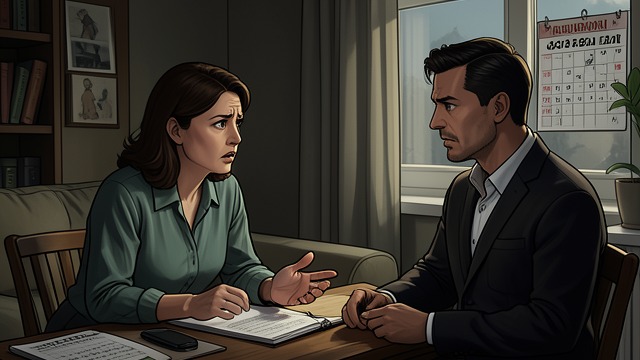
Kim Jiyoung begins speaking as women she knows, including her mother and the deceased Cha Seungyeon. During one episode, she confronts Jung Daehyun’s family about holiday labor and the expectation that her family should accommodate his.
To Jung Daehyun, the episodes are alarming and difficult to interpret. He arranges psychiatric care, initially assuming the behavior is connected to postpartum distress and the strain of raising a young child.
A Broader Diagnosis
The psychiatrist first considers a familiar postnatal diagnosis, then becomes less certain as Kim Jiyoung calmly recounts the accumulated events of her life. Her symptoms cannot be understood solely as a sudden departure from an otherwise neutral past.
By 2016, the psychiatrist recognizes that his initial interpretation overlooked the social world surrounding her. The episodes remain a clinical problem requiring treatment, but their meaning also points toward a lifetime of unequal demands and constrained choices.
1982–early childhood
Elementary school, late 1980s
Adolescence through early adulthood, 1990s–2005
2012–2015
Autumn 2015–2016
